

Figuring out what to wear for a desert safari in Dubai is actually way simpler than it sounds. The golden rule? Think light, breathable fabrics and layers. The perfect outfit is all about pairing some loose-fitting trousers or a long skirt with a comfy top, and then having a scarf or light jacket ready for when the sun goes down and things cool off.
Your Essential Dubai Desert Safari Packing List
Heading out on a desert safari is one of those quintessential Dubai experiences, a perfect mix of heart-pumping adventure and unbelievably serene landscapes. But here’s the thing: the desert plays by its own rules. The temperature swing from a blazing hot afternoon to a surprisingly cool evening is no joke, and that's why packing smart is so important.
Think of your clothes as your first line of defence against the elements—the sun, the sand, and those changing temperatures. Getting your wardrobe right isn't about fashion; it's about being comfortable and safe from the moment you hop in the 4×4 until you're gazing at the stars.
A well-thought-out outfit means you can just dive into the fun without giving your clothes a second thought. Whether you're gripping the roll cage during an exhilarating dune bashing run, swaying on a camel's back, or kicking back for a traditional BBQ dinner, the right gear makes all the difference. The aim is to choose items that are versatile, protective, and practical for every single part of your Seven Tours Dubai adventure.
The Core Components of Your Outfit
Your packing strategy should really focus on three main things: tops, bottoms, and the right accessories. Each one plays a key part in handling the desert climate.
You can't go wrong with loose-fitting clothes made from natural stuff like cotton or linen. They're your best friends out here because they let the air move around and keep you cool. And trust me, long trousers will do a much better job of protecting you from the sun and sand than a pair of shorts ever could.
This visual guide breaks down the key items you'll want to have on your desert safari packing list.
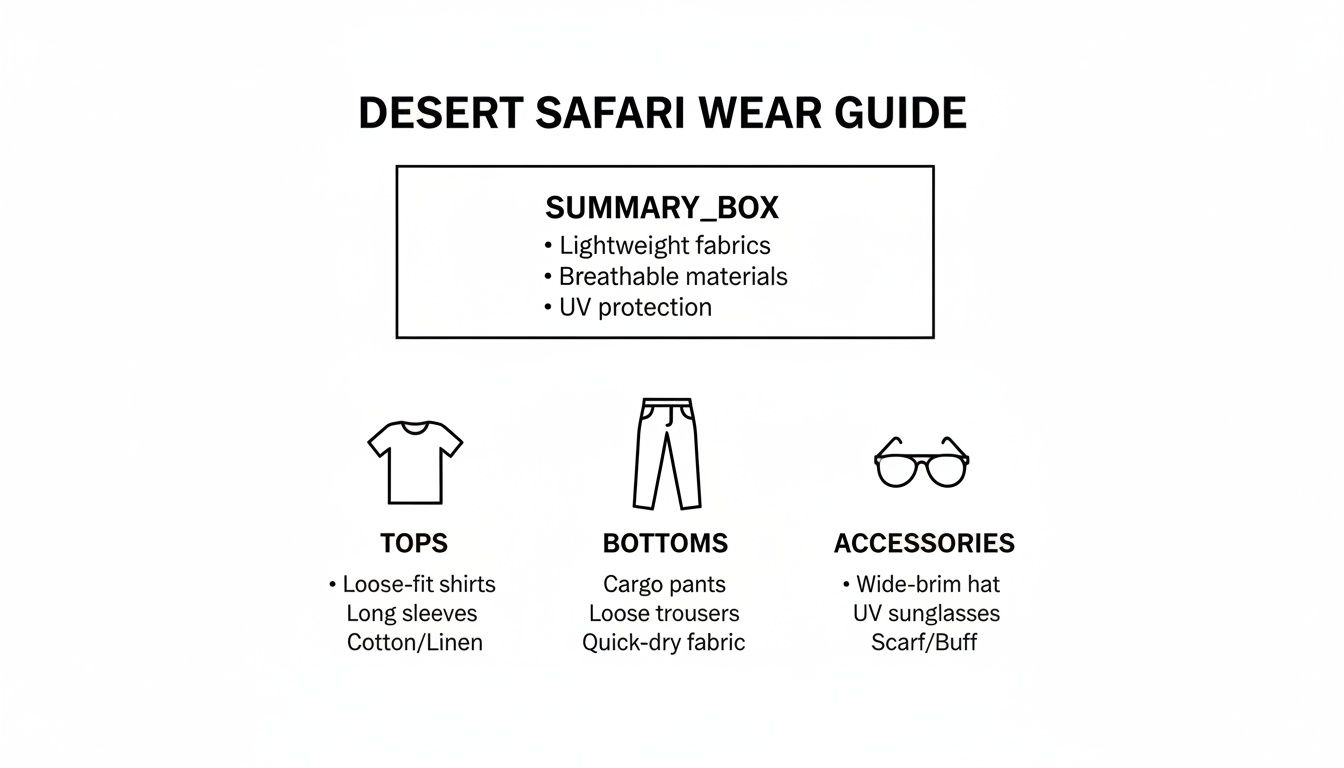
As you can see, the main idea is to focus on breathable tops, protective bottoms, and accessories that shield you from the sun for the most comfortable trip possible.
Desert Safari Wardrobe At a Glance
To make packing a total breeze, I've put together a quick checklist table with the essentials for everyone in your crew. Just remember, comfort is always the top priority out here.
| Category | Men's Recommendations | Women's Recommendations | Children's Recommendations |
|---|---|---|---|
| Tops | Loose cotton t-shirts, linen button-down shirts (long-sleeved for sun protection). | Breathable blouses, loose-fitting cotton tops, modest tunics. | Lightweight, long-sleeved cotton shirts in light colours. |
| Bottoms | Lightweight chinos, cargo trousers, or linen pants. Avoid shorts. | Flowy maxi skirts, wide-leg linen trousers, or loose-fitting cargo pants. | Loose cotton trousers or leggings to protect their legs from sun and sand. |
| Outerwear | A light jacket, hoodie, or windbreaker for the evening chill. | A pashmina, large scarf, or a light cardigan. It gets surprisingly cool. | A simple zip-up hoodie or a lightweight jacket. |
| Footwear | Secure sandals with straps (like Tevas), trainers, or closed-toe walking shoes. | Sturdy sandals, flats, or trainers. Avoid heels and loose flip-flops. | Closed-toe sandals or comfortable trainers to keep sand out. |
| Accessories | Sunglasses with UV protection, a wide-brimmed hat or cap. | A wide-brimmed sun hat, UV-blocking sunglasses, and a light scarf (shemagh). | A sun hat that ties under the chin, and kid-sized sunglasses. |
This table should give you a solid starting point for getting everyone packed and ready to go.
Beyond just your clothes, there are a few other key items you shouldn't forget. For a really detailed look at what else to bring, you should check out our guide on the top 10 essential survival tips for desert safari in Dubai.
And one last pro tip: absolutely pack a light jacket or a pashmina. It’s not an exaggeration to say the desert temperature can drop by up to 15°C after the sun disappears. You'll be glad you have it when you're enjoying the evening entertainment under the stars.
How to Choose the Right Fabrics for Desert Comfort
The secret to a comfortable desert safari isn't just about what style of clothes you pick; it’s about the very material they're made from. Think of it like this: choosing the right fabric is like picking the right tool for a job. It can be the difference between a fantastic adventure and a miserably sticky ordeal. You want fabrics that work with you, not against you.
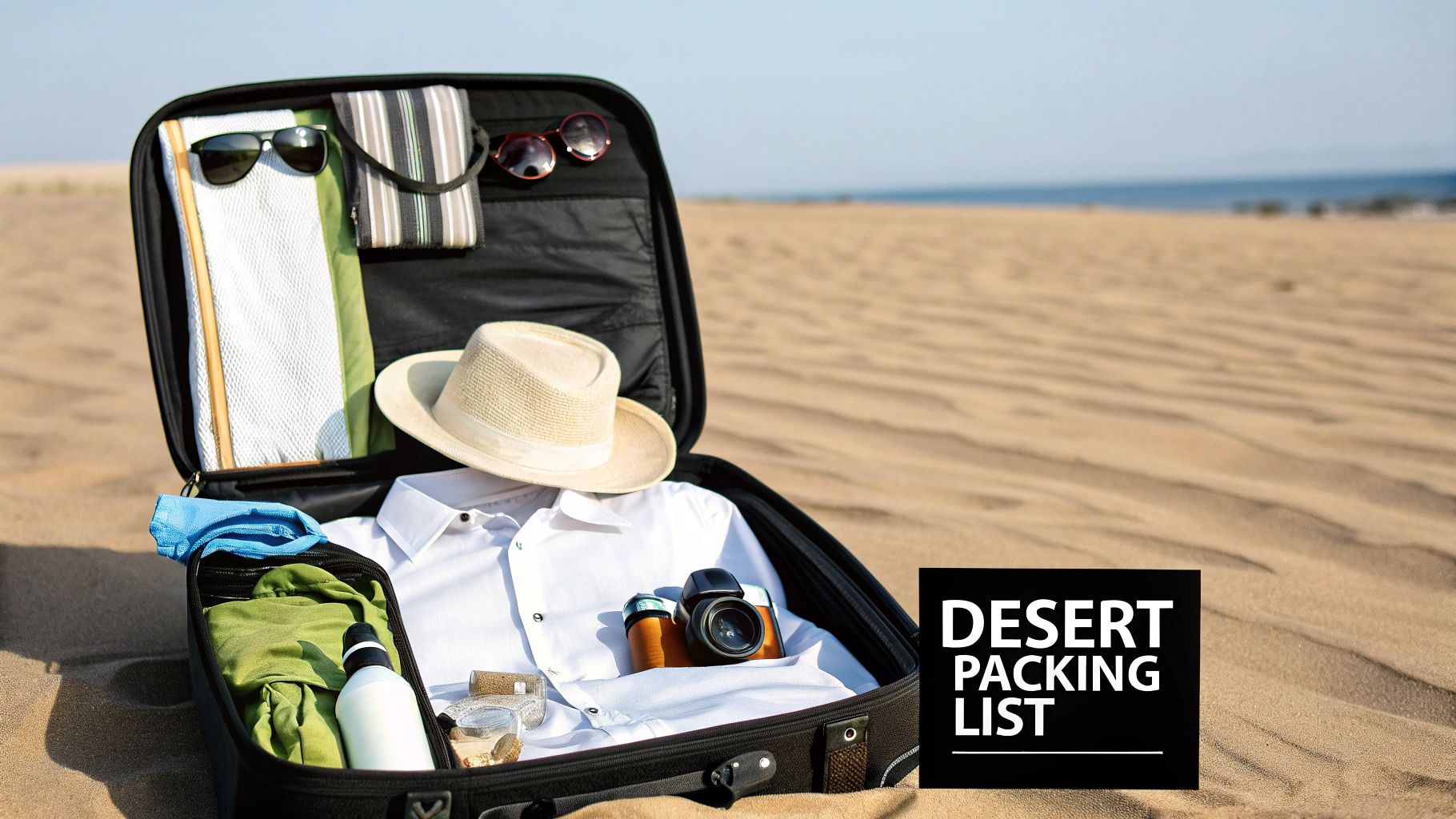
Your clothing is basically your personal air-conditioning system out on the dunes. The best fabrics for this are ones that are breathable, letting air move freely to help moisture—that's your sweat—escape. This one simple quality is the most important thing for beating the heat and staying fresh all day.
The Champions of Breathability: Natural Fibres
When you're deciding what to wear for a desert safari in Dubai, natural fibres are the undisputed champs. They just have inherent qualities that most synthetics can't touch, making them perfect for the dry, hot climate.
- Cotton: This is the absolute go-to for desert wear. It’s soft, light, and lets your skin breathe, which helps heat escape from your body. You can't go wrong with a loose cotton t-shirt or a flowy tunic as the base of your outfit.
- Linen: Famous for its incredible coolness, linen is another top choice. The loose weave allows for maximum airflow, making it feel crisp and airy even when the sun is blazing. Linen trousers or a button-down shirt look effortlessly stylish and feel amazing.
These fabrics act like a natural wick, pulling perspiration away from your skin so it can evaporate quickly. It's this process that helps regulate your body temperature and keeps you from feeling clammy and gross.
Fabrics to Avoid in the Desert Heat
Just as important as knowing what to wear is knowing what not to wear. Some materials will absolutely turn your desert adventure into a sweaty mess by trapping every bit of heat and moisture against your body.
Imagine wrapping yourself in plastic film on a hot day—that's essentially what you're doing when you wear certain synthetic fabrics in the desert. They create a barrier that prevents sweat from evaporating, causing you to overheat quickly.
Make sure you steer clear of these usual suspects:
- Polyester & Nylon: While they have their place in activewear, these synthetics are generally not breathable. They trap heat right next to your skin and can get pretty smelly and uncomfortable once you start sweating.
- Denim: Jeans are just a bad idea. They're heavy, restrictive, and take forever to dry. They’ll soak up the sun's heat and feel incredibly hot and cumbersome when you're trying to walk on sand.
- Silk & Rayon: They might feel lightweight, but these fabrics don't handle sweat well at all. They show moisture marks easily and just don't offer the same durability or breathability as good old cotton or linen.
Choosing the right material is a practical decision that directly affects your comfort. This is especially true in Dubai, where summer temperatures can climb to 44°C. Picking breathable fabrics like cotton or linen is one of the smartest moves you can make for your Seven Tours Dubai safari. We’ve seen it time and again: improper clothing is a huge reason tourists get uncomfortable in the heat. Breathable options, on the other hand, can wick away up to 70% more sweat than polyester, keeping you feeling much drier whether you're sandboarding or quad biking.
By making smart fabric choices, you set yourself up for a day where you can focus on the incredible views and thrilling activities, not on how hot and sticky you feel.
Mastering the Art of Layering for Day and Night
The Dubai desert has a little trick up its sleeve: its temperature does a complete disappearing act every single day. One minute you’re soaking up the golden afternoon sun, feeling the warmth on your skin, and the next, a surprising chill sneaks in as the first stars pop out. This dramatic swing is exactly why mastering the simple art of layering isn't just a suggestion—it's the single best strategy for staying completely comfortable from the start of your safari to the very end.
Think of your clothes as a personal climate control system. Instead of relying on one heavy jacket that’s either too much or not enough, you’ll use a few lighter pieces that you can add or remove as the desert works its magic. It's the key to being perfectly prepared for both the peak daytime heat and the crisp evening air, making it a core part of figuring out what to wear for desert safari Dubai adventures.
A smart layering system is really just three simple pieces, each with its own job to do.
The Three-Part Layering System
The real beauty of this approach is how simple and effective it is. It’s not about stuffing your bag with a massive wardrobe; it’s about choosing a few smart items that work together to keep you comfortable, no matter what the desert throws at you.
-
The Base Layer (Your Foundation): This is what’s right up against your skin, and its main job is to be light and breathable. A loose-fitting cotton t-shirt or a simple top is the perfect starting point. It lets the air move and keeps you from feeling stuffy when the sun is at its strongest.
-
The Mid-Layer (The Versatile Shield): This is your all-rounder, the piece that adapts with you. A long-sleeved, button-down shirt made of linen or thin cotton works brilliantly. In the afternoon, you can wear it open for a bit of a breeze or roll up the sleeves. As the sun gets more intense, you can button it up to protect your arms from those direct UV rays.
-
The Outer Layer (Your Evening Warmth): You'll be so glad you brought this one along after the sun sets. The temperature drop in the desert can be surprisingly fast, often falling by as much as 15°C. A pashmina, a big scarf, a light fleece, or even a simple windbreaker is all you need to stay cosy during the BBQ dinner and entertainment.
With these three pieces, you're in total control. You can adjust on the fly, making sure you’re always comfortable throughout your Seven Tours Dubai safari.
Your Layering Strategy in Action
To really see how well this works, let's walk through a typical evening safari and see when each layer becomes your best friend.
Your adventure kicks off in the mid-afternoon. As you head into the desert for some heart-pumping dune bashing, you'll probably be perfectly fine in just your base layer—that comfy cotton t-shirt. The 4×4 is air-conditioned, and honestly, the sheer excitement will keep you warm.
Next up, you arrive for a camel ride. The sun is still pretty high in the sky, and its rays can be strong. This is the perfect moment to throw on your mid-layer. That long-sleeved shirt will shield your skin from sunburn without trapping heat, making sure your scenic trek is nothing but pleasant.
The real game-changer happens right as the sun begins to dip below the dunes. That incredible view comes with a surprisingly swift drop in temperature. This is where your planning pays off, as you can just reach for your outer layer and beat the evening chill before it even starts.
By the time you make your way to the desert camp for the BBQ dinner, the air will be noticeably cooler. Now's the time to put on your outer layer. Whether it's a cosy pashmina draped over your shoulders or a light jacket you pull from your bag, this final piece will keep you perfectly warm as you dig into the delicious food and watch the tanoura and fire shows under a canopy of stars.
By getting this simple technique down, you guarantee that you'll be focused on the incredible moments of your safari, not on wishing you had another layer. It's a small bit of prep that makes for a seamless, unforgettable journey from daylight to starlight.
Choosing Footwear for Your Desert Adventure
While you might spend a lot of time picking the perfect layered outfit, your choice of shoes can make or break your entire desert safari experience. Seriously, the wrong footwear can single-handedly turn an amazing day into a frustrating ordeal. Your shoes are the foundation for a good time, and the soft, shifting sands of Dubai demand something more practical than your everyday pair.
Think about it this way: you wouldn't wear stilettos to go hiking, right? The desert is its own unique terrain, and it has rules. Flip-flops and open-backed sandals are probably the worst offenders. Not only does the fine sand get incredibly hot, but those types of shoes offer zero protection and have a nasty habit of getting swallowed by the dunes within the first few steps. Trust me, you don't want to be that person hopping on hot sand, trying to find a lost shoe.
Finding the Right Fit for the Sand
Picking the right footwear is all about striking a balance between protection, stability, and comfort. You need something that will stay glued to your feet, keep the scorching sand out, and support you through every part of the adventure—from a peaceful camel ride to the high-energy thrill of dune bashing.
For a desert safari, your best bet will always be shoes that are both secure and comfortable. Let’s break down the top contenders:
-
Secure Sandals with Straps: If you love the breezy feel of sandals, make sure you choose a pair with solid straps that wrap around your ankle and heel. This keeps them firmly in place while letting your feet breathe.
-
Trainers or Sneakers: A pair of lightweight trainers is a fantastic all-rounder. They give you great support for walking on uneven ground and completely shield your feet from the hot sand.
-
Closed-Toe Walking Shoes: For maximum protection, especially if you plan on sandboarding or quad biking, closed-toe walking shoes or light hiking boots are the way to go. They offer the best defence against sand, stones, and anything else you might encounter.
To make it even clearer, here’s a quick comparison of what works and what really, really doesn’t.
Desert Safari Footwear Comparison
| Footwear Type | Pros | Cons | Best For |
|---|---|---|---|
| Trainers/Sneakers | Excellent protection from hot sand, great support, very secure. | Can get warm, sand can get inside. | All activities, especially dune bashing and walking. |
| Secure Strap Sandals | Very breathable, sand escapes easily, stay on your feet. | Less protection from sun and debris. | Camel riding, camp activities, casual walking. |
| Light Hiking Boots | Maximum protection, great ankle support, keeps all sand out. | Can be heavy and hot. | Adventure-focused activities like extensive walking or quad biking. |
| Flip-Flops/Slides | Easy to slip on and off. | Easily lost in the sand, no protection from heat, no support. | Leaving in the car. Seriously, don't wear them. |
Ultimately, the goal is to wear something you can forget about so you can focus on the fun.
Why a Secure Fit is Non-Negotiable
A snug fit isn't just about feeling good; it's a genuine safety issue, especially when the adrenaline starts pumping. Imagine trying to balance on a sandboard while also worrying your shoe is about to fly off into the sunset. It’s a recipe for a wipeout. The same goes for quad biking, where your feet need to stay planted.
Having a secure shoe is the difference between confidently carving down a sand dune and spending your time digging a lost flip-flop out of the sand. It allows you to fully immerse yourself in the experience without a second thought.
By choosing a pair of secure, comfortable shoes, you’re setting yourself up for an incredible adventure with Seven Tours Dubai. You'll be able to move freely and safely, keeping your focus on the breathtaking views and thrilling moments, not on sore or sandy feet.
Essential Accessories for Sun Protection and Style
Out here in the vast Dubai desert, the right accessories aren't just about looking good—they're your personal toolkit for staying comfortable and safe. Think of them less as fashion statements and more as essential gear for the adventure ahead. Picking the right items is a massive part of figuring out what to wear for a desert safari, making sure you're properly shielded from the sun, sand, and wind.
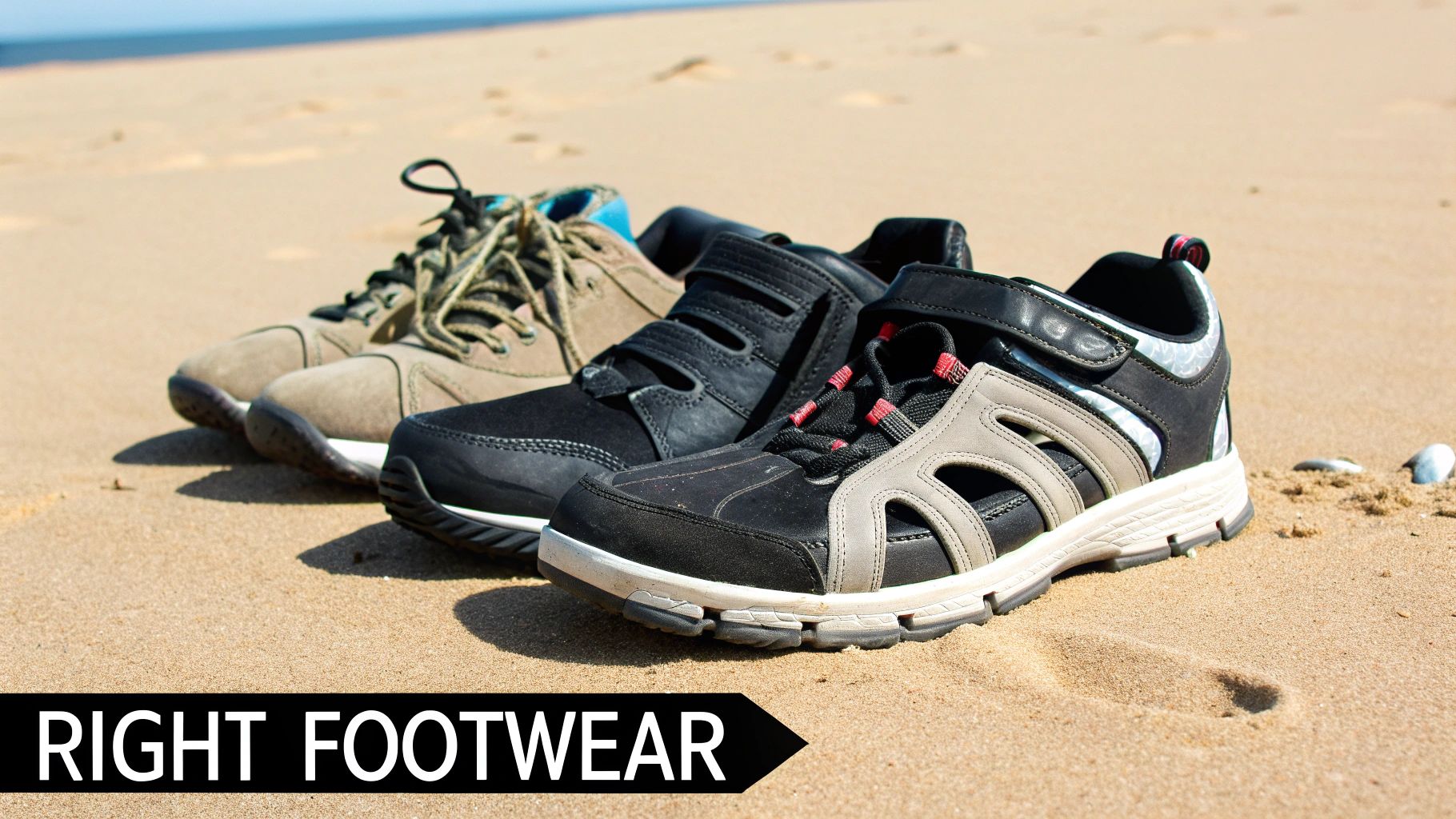
Honestly, these items are your primary defence against the elements. A quality pair of sunglasses or a good hat can be the difference between a fantastic day and a miserable one, letting you soak in every moment of the experience without regret.
Your First Line of Defence Against the Sun
The desert sun isn't messing around; it's intense and unforgiving. That makes solid sun protection an absolute must. The best approach is a multi-layered defence that keeps all your exposed skin covered, protecting you from those powerful UV rays that can cause a nasty sunburn faster than you'd think.
-
UV-Blocking Sunglasses: These are non-negotiable. The glare bouncing off the bright sand can be literally blinding and will give you a headache in no time. Grab a pair that offers 100% UV protection to protect your eyesight and keep you from squinting all day.
-
A Wide-Brimmed Hat: A good hat does more than just keep the sun off your face. It protects your scalp, neck, and ears—spots everyone forgets to cover with sunscreen. A hat with a nice wide brim gives the best coverage, but a cap with a neck flap is a great practical option, too.
-
High-SPF Sunscreen: Lather on a broad-spectrum sunscreen with at least SPF 30 before you even head out for the safari. Don't forget to bring it with you to reapply, especially if you get sweaty, to keep it working all day long.
The Multi-Purpose Desert Scarf
If there's one accessory that punches way above its weight, it's a traditional scarf, often called a shemagh or keffiyeh. This simple piece of fabric is an incredibly versatile tool out in the desert, offering protection in more ways than one.
A shemagh isn't just a piece of fabric; it's a portable shield. It protects your face from whipping sand during a dune bashing session, covers your neck from the relentless sun, and can even offer a bit of warmth as the evening air cools.
You'll be seriously thankful you have one when you're on a thrilling dune bashing or quad biking session with Seven Tours. It's the perfect thing to pull over your nose and mouth to keep the swirling dust clouds out. Plus, it's lightweight, easy to pack, and works like a charm.
Practical Must-Haves for a Seamless Day
Beyond sun protection, a couple of other small items can make a huge difference in your comfort and convenience. These are the little things that help you handle the small challenges the desert throws at you.
A small, lightweight backpack or a crossbody bag is perfect for keeping your essentials secure and, most importantly, sand-free. It's just the right size for your phone, camera, sunscreen, and any other personal items you don't want to be weighed down by. Also, the dry desert air is brutal on your lips, so a lip balm with SPF is a small but mighty addition to your kit to prevent them from getting chapped.
It's also worth remembering how your clothing and accessories work together. Long sleeves and trousers are your best friends for preventing sunburn, especially during activities like dune buggy rides or camel treks. According to UAE health ministry data, a staggering 40% of international tourists get sunburned on desert trips without proper coverage, as the UV rays can hit index 12. Likewise, sand-related skin irritations affect 55% of people wearing shorts during activities like quad biking. You can find more great tips on safari prep from the travel experts at ForeverBreak.com.
What to Wear for Quad Biking and Sandboarding
For a lot of us, a desert safari is all about the adrenaline rush. Nothing gets the heart pounding quite like tearing across the dunes on a quad bike or sliding down a steep sandy slope on a sandboard.
If these high-energy activities are on your list with Seven Tours Dubai, your clothing needs a few tweaks for both safety and pure, unadulterated fun. While the basic rules of desert wear still apply, thrill-seeking calls for an outfit that’s a bit more secure and protective.
Think of your clothes as your gear. A race car driver wouldn’t hit the track in a baggy tracksuit, and you shouldn't either. Clothes that are comfy for relaxing in the camp can quickly become a hazard, snagging on equipment or getting in your way when you need to move fast.
Prioritising Safety and Mobility
When you’re in the middle of a high-octane adventure, your outfit should help the experience, not get in the way. It's all about finding that sweet spot: snug enough that it won’t flap around, but flexible enough that you can twist, turn, and lean into the action.
Here are a few essential tips for dressing for adventure:
- Choose Snug-Fitting Tops: A slightly more fitted t-shirt or long-sleeved top is perfect. This stops the fabric from catching on the handlebars of your quad bike or whipping around in your face as you glide down a dune.
- Secure Loose Hair: If you have long hair, tying it back securely is an absolute must. It keeps it out of your eyes and, more importantly, prevents it from getting tangled in any moving parts.
- Tuck in Your Shirt: It sounds simple, but tucking in your shirt is a game-changer. It keeps everything streamlined and secure, letting you focus completely on the thrill of the ride.
The Case for Full-Length Trousers
While we recommend long trousers for any desert safari, they become non-negotiable for quad biking and sandboarding. They offer a critical layer of protection that shorts just can't match.
Think of long trousers as your personal shield against the elements of adventure. They guard your skin not just from the sun, but from the heat of a quad bike's engine and the abrasive spray of sand kicked up at high speeds.
Flying sand can really sting bare legs, and the heat radiating from an engine can be surprisingly intense. Durable, full-length trousers made from a tough material like cotton or canvas will protect you from minor scrapes and keep you comfortable.
For a deeper dive into gearing up for this specific adventure, check out our complete guide on what to expect during a desert safari quad biking experience. By dressing the part, you make sure your focus stays where it should be: on the adrenaline and the incredible desert scenery.
Common Questions About Desert Safari Attire
Even after you've got a solid plan, a few last-minute questions always seem to pop up when you're finalising your safari outfit. Figuring out what to wear for a desert safari in Dubai is pretty simple once you get the hang of dressing for comfort and protection, but let's clear up those lingering doubts so you can head out feeling totally prepared.
This section gets straight to the point, answering the most frequent queries we get from travellers just like you.
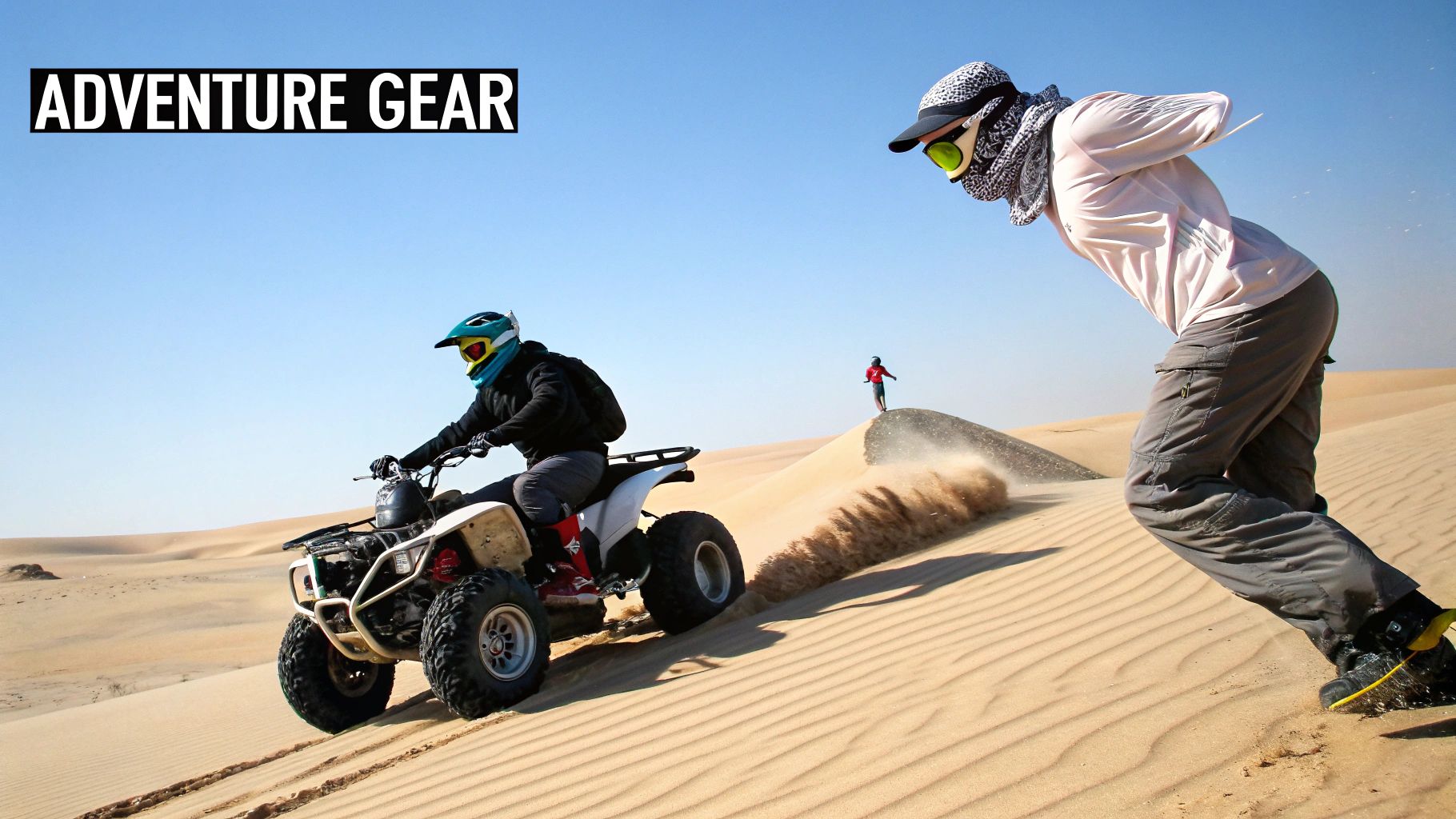
We’ve pulled together insights from countless trips into the dunes to give you practical advice that goes beyond a generic packing list. Think of this as your final check-in before the real adventure begins.
Can I Wear Shorts on a Dubai Desert Safari?
You technically can, but honestly, we really advise against it. Lightweight long trousers will serve you so much better out there. For starters, they offer far more protection from the intense sun, saving your legs from a nasty sunburn after a few hours outdoors.
They also act as a barrier against scorching hot sand, any scrapes you might get from sandboarding, and even the coarse, scratchy hair of the camel you'll be riding. When it comes to all-around comfort and safety, long trousers are the much smarter choice.
Do I Need to Dress Conservatively?
Not really. A desert safari is a tourist-focused experience, so the vibe is generally very casual and relaxed. You definitely don’t need to worry about dressing up. That said, opting for slightly more modest clothing—like a t-shirt that covers your shoulders and long trousers or a maxi skirt—is a great idea.
This approach works on two levels: it gives you better sun protection and it shows a nice touch of respect for local customs. It just helps create a comfortable and welcoming atmosphere for everyone at the shared desert camp.
The atmosphere at the desert camp is welcoming and geared towards international guests. The main goal is your comfort, so focus on practical clothing that protects you from the elements while being respectful.
How Cold Does the Desert Get at Night?
This is the one that surprises almost everyone. Once that sun goes down, the temperature can drop—and drop fast. It's not uncommon for it to fall by 10-15°C, especially in the cooler months between November and March.
Now, it's not going to be freezing, but the sharp contrast from the daytime heat will make it feel pretty chilly. Packing a light jacket, a fleece, or even a versatile pashmina is an absolute must if you want to stay warm and comfortable while enjoying the evening BBQ under the stars.
What Should Children Wear for the Safari?
The same rules apply to the little ones, but with an even bigger focus on protection. Dress them in lightweight, breathable clothes that offer full coverage. Think loose cotton trousers and a long-sleeved t-shirt—that's the perfect combo.
A sun hat is non-negotiable, and one that ties under the chin is best so it doesn't get swept away by the desert wind. Most importantly, make sure they have on sturdy, closed-toe shoes like trainers. This will protect their feet from the hot sand and let them run around and play safely at the camp. For more great family travel ideas, you can check out resources like Peaceland Travel's family guide.
Now that your wardrobe is sorted, you're ready for an unforgettable adventure. Let Seven Tours Dubai handle all the details, from thrilling dune bashing to a magical evening under the stars. Book your perfect desert safari today at https://desertsafarisunset.com.