
Look beyond the futuristic skyline and chrome-plated marvels, and you'll find Dubai's true soul, tucked away in its history. A heritage house in Dubai isn't just an old building; it’s a time capsule, a rare window into the traditional Emirati way of life before the city’s explosive growth. These preserved homes are the beating heart of Old Dubai, where you can feel the culture and history in the very walls around you.
Discovering Dubai's Soul in Its Heritage Houses
To really get Dubai, you have to walk through its past. Step away from the city's dizzying pace and you'll discover a world of peaceful courtyards, clever wind towers, and twisting alleyways. This is where you’ll find the heritage houses, the foundation of the city's identity. These homes, mostly clustered in historic areas like the Al Fahidi Historical Neighbourhood, were once the bustling hubs of family and community life for pearl merchants, traders, and fishermen.

Wandering through a heritage house in Dubai feels like you've stepped into another era. Each building tells a story of survival and smart design, built with local materials like coral stone and gypsum to beat the harsh desert heat. Think of this guide as your key to unlocking those stories.
What You Will Discover
This journey will pull you right into the cultural fabric of the Emirates. We’re going to dive into:
- Architectural Marvels: You'll see exactly how traditional Emirati homes were masterfully designed to keep cool and bring families together.
- Must-See Locations: We'll point you to the most important heritage spots, from lively cultural hubs to quiet, art-filled courtyards you won't want to leave.
- Visitor Essentials: We’ve got all the practical tips for planning your visit, like the best times to go and how to easily find your way around the old districts.
When you visit these preserved spaces, you’re doing more than just sightseeing. You're connecting with the real origins of Dubai and getting a much deeper feel for the resilience and rich culture that paved the way for the global city we know today.
This guide will set you up for an exploration you won't forget. Get ready to wander through history, feel the warmth of Emirati hospitality, and discover the true soul of Dubai, hidden right inside its most cherished old homes.
The Architecture of Traditional Emirati Homes
When you step into a heritage house in Dubai, you’re not just walking into an old building. You're entering a masterclass in sustainable living, engineered centuries ago to master the challenges of a fierce desert climate. These homes are far from simple mud-brick structures; their architecture is a testament to a deep understanding of natural science and community-focused life.
The entire design philosophy was brilliantly simple: use what the land gives you. Builders relied on locally sourced materials perfectly suited to the region. Thick walls were formed from coral stone and gypsum, harvested right from the sea and coastal flats. These weren't just for show—they were incredible insulators, soaking up the brutal daytime heat and releasing it slowly during the cool desert nights to keep the inside comfortable.
This image beautifully illustrates how these houses act as a crossroads where Dubai's historical narrative and its cultural traditions meet.
Genius in Design: The Barjeel and Hosh
The most iconic feature you'll notice is the barjeel, or wind tower. Think of it as nature's own air conditioner. This clever tower was designed to catch cooler breezes high above the ground and funnel them down into the rooms below. As the cool air flowed in, it would push the hot, stale air out, creating a constant, gentle airflow that made life bearable long before electricity was even a dream.
Just as crucial was the hosh, the central open-air courtyard. This wasn't just wasted space; it was the vibrant heart of the home. Shielded from the direct sun by the surrounding rooms, the hosh was where families gathered, kids played, and daily life unfolded. It offered privacy, security, and a communal hub all in one.
Together, the wind tower and the courtyard created a brilliant passive cooling system. The Barjeel brought in the cool air, and the hosh let the hot air rise and escape. It was a natural cycle of ventilation that defined comfort in old Dubai.
Materials That Tell a Story
Even the choice of materials tells a story of incredible resourcefulness. Take the Heritage House, for example, which was built way back in 1890. Its walls are a mix of coral, stone, plaster, teakwood, and even palm fronds. This blend of local and imported materials perfectly reflects Dubai's long history as a bustling trading hub. You can explore more about this historic site’s construction on the Dubai Culture website to see exactly how these elements came together.
Understanding these key features completely changes how you see these buildings. A simple visit transforms into a fascinating architectural discovery, giving you a real appreciation for the ingenuity of the people who called this desert home.
Your Essential Guide to Must-Visit Heritage Sites
Now that you have a feel for the incredible architecture packed into every heritage house in Dubai, it's time to dive in and explore some of the most captivating spots for yourself. These landmarks are so much more than just preserved buildings; they're living museums, each opening a unique window into the soul of Old Dubai. Let’s walk through the must-see locations in the Al Fahidi Historical Neighbourhood and beyond, making sure you soak up the very best of the city's rich past.
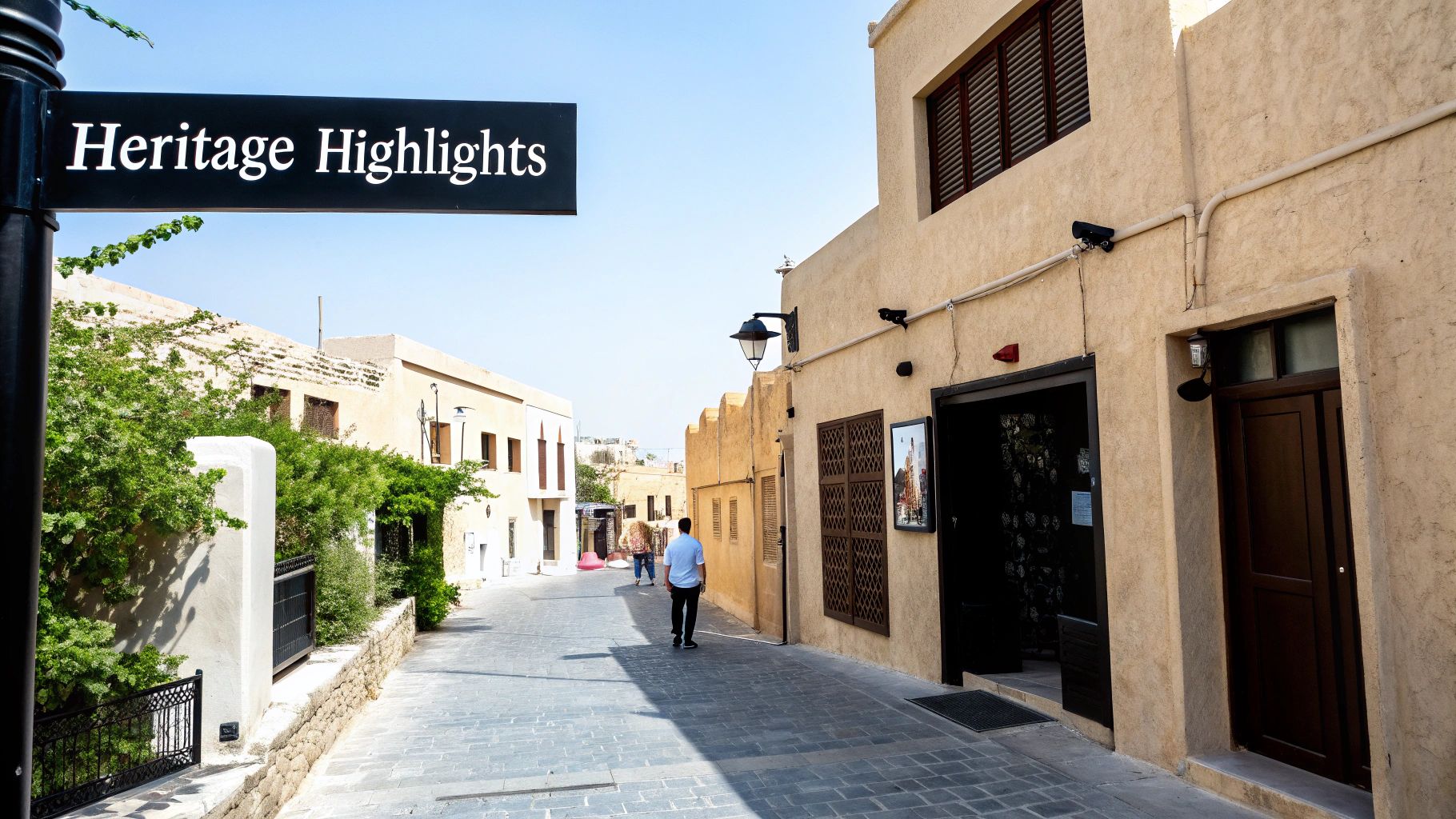
Your journey into history really begins the moment you step into those winding alleyways. Each restored house tells a different part of Dubai's story. From bustling cultural centres to tiny, specialised museums, these places bring history to life in a way you can actually touch and feel.
Sheikh Mohammed bin Rashid Al Maktoum Centre for Cultural Understanding (SMCCU)
For most people, the SMCCU is the perfect first stop. Housed in a beautifully restored wind tower house, its mission is simple but incredibly powerful: "Open Doors, Open Minds." This isn’t one of those quiet, hands-off museums; it's a completely interactive experience designed to genuinely connect people and break down cultural barriers.
Here, you can join a traditional Emirati meal, ask all the questions you’ve ever had about local customs, and get a real understanding of Islamic culture in a friendly, welcoming space. It’s an absolute must if you want to connect with the local heritage on a personal level.
The XVA Art Hotel and Gallery
Tucked away in the neighbourhood is the XVA Art Hotel, a brilliant spot where history and modern creativity collide. This one-of-a-kind place is both a boutique hotel and a highly respected art gallery, all within the walls of a historic home. Its quiet courtyards, shaded by leafy trees, are a genuine escape from the city's frantic energy.
The gallery itself features stunning contemporary art from across the Middle East, creating a striking contrast between the modern pieces and the traditional architecture that holds them. It’s a powerful reminder of how Dubai’s heritage continues to spark new ideas and expression.
Each heritage site offers more than a history lesson; it provides an experience. Whether you're sipping traditional coffee, admiring local art, or sharing a meal, you are actively participating in the culture these homes were built to nurture.
Unique Museums in Heritage Houses
Beyond the larger centres, Al Fahidi is dotted with several specialised museums, each tucked into its own charming heritage house. These smaller, focused exhibits let you take a deep dive into specific parts of Emirati culture and history.
To help you navigate, here’s a quick look at some of the top spots you won't want to miss.
Key Heritage Sites in Old Dubai at a Glance
| Heritage Site | Primary Focus | Visitor Experience Highlight |
|---|---|---|
| The Coffee Museum | The history and culture of coffee in Arabia | Watching traditional roasting and brewing methods—and tasting the results! |
| Al Shindagha Museum | The broad history of Dubai's evolution | Exploring a massive complex of around 80 houses covering everything from pearl diving to the Creek's history. |
| The Coins Museum | Regional numismatic history | Seeing over 470 rare coins that tell the story of trade and power across centuries. |
Let's break these down a bit more:
- The Coffee Museum: This place is an absolute dream for coffee lovers. It traces the journey of the coffee bean from its origins right through to its vital role in Arabian hospitality. You’ll see centuries-old roasting tools and, of course, get to sample some authentic preparations.
- Al Shindagha Museum: Located right on the historic Dubai Creek, this sprawling museum is actually a collection of about 80 repurposed heritage houses. It tells a grand story, covering everything from the city's origins to its deep maritime traditions. If Dubai's blend of old and new fascinates you, you might also like our guide to the Dubai Frame tour.
- The Coins Museum: Though small, this museum packs a punch. It displays over 470 rare coins from different historical eras in the region, offering a fascinating look into the area's trade routes and economic past.
Each of these sites adds another thread to the incredible tapestry of Dubai's history. By visiting them, you begin to piece together a full picture of the city’s amazing journey from a humble trading post to the global hub we see today.
How to Plan Your Visit to Old Dubai
A trip to explore a heritage house in Dubai is like stepping through a portal in time, but even time travellers need a good plan. To make sure your cultural deep-dive is smooth and memorable, here are my insider tips for navigating the historic districts like a seasoned explorer.
First things first, timing is everything. The midday sun, especially in the summer, is no joke and can quickly turn an adventure into an ordeal. I always tell people to wander the alleyways in the morning (from 9 AM to 1 PM) or wait for the late afternoon (after 4 PM). Not only is the heat far more manageable, but the golden-hour light is absolutely perfect for photos.
Getting There The Authentic Way
Sure, you could just grab a taxi, but where's the fun in that? To really get into the spirit of Old Dubai, you need to arrive the way traders and locals have for generations: by water. Combining the modern Dubai Metro with a traditional Abra ride is a far more scenic experience and sets the perfect tone for the day.
- Take the Dubai Metro: Hop on the Green Line and get off at either Al Ghubaiba or Sharaf DG station. From either stop, it’s just a short, easy walk down to the Dubai Creek.
- Cross the Creek by Abra: Find the nearest Abra station and climb aboard one of the traditional wooden water taxis. This iconic ride costs just AED 1, and the views of the old trading dhows against the historic skyline are priceless.
Once you hop off the Abra, you’re standing right at the entrance to the Bur Dubai souks, just a stone's throw from the Al Fahidi Historical Neighbourhood.
Practical Tips for Your Visit
A few practical details can make a world of difference between a good day and a great one. These aren't strict rules, but keeping them in mind will make your visit much more comfortable and respectful.
Most of the heritage sites and museums in Old Dubai open their doors around 8:00 AM or 9:00 AM and close up shop in the evening, usually around 7:30 PM. Be aware that hours can shift, especially on Fridays when many places open later in the afternoon. It’s always a smart move to quickly check the specific times for any must-see spots on your list.
Now, let's talk about what to wear. The key here is a blend of comfort and respect.
I always recommend dressing in modest, lightweight clothing that covers your shoulders and knees. This isn't just about showing respect for the local culture; it's also the best way to protect yourself from the sun. Most importantly, wear your most comfortable walking shoes—you'll be glad you did after a few hours on those charming but uneven cobbled lanes.
Getting lost in the winding alleys is part of the adventure, and thankfully, most of the area is pedestrian-friendly. While some of the older buildings have limited accessibility due to their historic structure, the main pathways are generally flat and easy to navigate.
If you really want to peel back the layers and understand what you're seeing, consider joining an Old Dubai walking tour. A good guide can bring the history to life, pointing out hidden gems and sharing stories you’d never discover on your own. With these tips in your back pocket, you're all set for a fantastic day exploring the heart and soul of Old Dubai.
Preserving Dubai's Past for the Future
In a city obsessed with shattering records and building the future, it’s easy to wonder if there’s any room left for the past. But protecting every heritage house in Dubai is a conscious, passionate mission to keep the city’s roots firmly planted in its incredible history. This isn't about freezing buildings in time like museum exhibits; it's about making sure the soul of Old Dubai keeps breathing.
Spearheading this vital work are dedicated groups like Dubai Culture, who meticulously orchestrate the restoration of these priceless buildings. Their job goes way beyond a fresh coat of paint. It involves painstaking research to ensure every single detail, from the coral stone walls to the hand-carved wooden latticework, is true to its original period. The real goal is to make these houses feel alive, not just old.
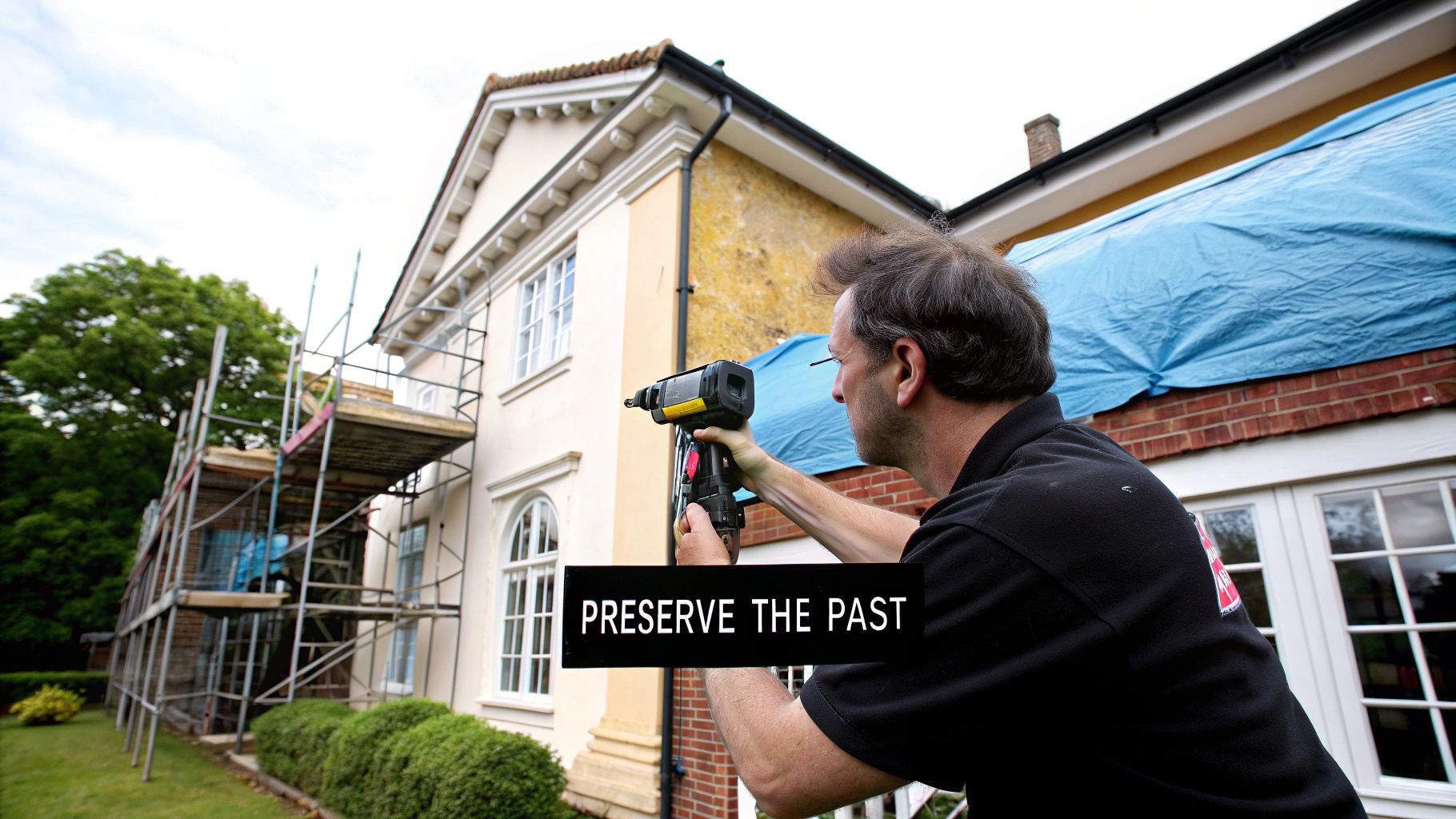
It’s a delicate dance, balancing ancient craftsmanship with modern-day tech to safeguard these treasures for generations of visitors.
Bridging Centuries with Modern Technology
Restoration in the 21st century is a fascinating blend of old and new. Today's conservationists use some seriously advanced tools to map out and protect these fragile structures. One of the coolest techniques is 3D laser scanning, which creates unbelievably detailed digital blueprints of a heritage house from top to bottom. This tech gives experts superpowers:
- Document Every Detail: It captures the exact measurements and condition of a building, essentially preserving its architectural DNA forever.
- Plan Precise Repairs: Restorers can run digital simulations of repairs before ever touching the physical structure, which guarantees accuracy and massively reduces risk.
- Create Virtual Experiences: These digital models are perfect for crafting immersive virtual tours, opening up Dubai's history to anyone, anywhere in the world.
This marriage of tradition and technology is what keeps Dubai's history intact. Take the Al Bastakia quarter, now known as Al Fahidi Historical Neighbourhood. It's home to Dubai’s largest cluster of traditional buildings, most of which were built between 1890 and 1950. The UAE's investment in these digital heritage technologies ensures these crucial sites are protected both in the real world and the virtual one. If you're curious, you can dig deeper into research on these digital preservation efforts and see their impact on historical sites firsthand.
By treating these sites as living cultural assets, Dubai keeps them relevant and engaging. This thoughtful approach turns a simple tourist stop into a genuine appreciation for a city that masterfully juggles its futuristic ambitions with a deep respect for its past.
Getting More from Your Visit with a Guided Tour
Sure, wandering through the winding alleyways of Old Dubai on your own is a real adventure. But if you want to truly understand what you’re seeing, a guided tour is priceless.
Think of a good guide as your personal storyteller. They can turn a simple walk past a heritage house in Dubai into a full-blown journey through time. Suddenly, the silent walls come alive with tales of the families who lived there, and you start noticing subtle architectural details you’d almost certainly miss otherwise.
A guide can point out how one barjeel's design is completely different from another or share stories about the buzzing pearl trade that once defined life along the Creek. This context is what transforms a casual stroll into a deep connection with the city's roots. It’s the difference between just looking at history and actually feeling it.
Choosing the Right Tour for You
The best part is, there’s a tour out there for every kind of traveller. You're not stuck with a one-size-fits-all historical walk-through. Instead, you can find tours that dive deep into specific interests, making your experience of Old Dubai that much richer and more personal.
Here are a few popular angles you could take:
- Cultural Walking Tours: These give you the full picture, covering the history, the incredible architecture, and what daily life was like inside the Al Fahidi Historical Neighbourhood.
- Emirati Food Tours: What better way to explore a culture than through its food? These tours lead you to hidden-gem local eateries to sample traditional dishes you’d struggle to find on your own.
- Art and Heritage Tours: Absolutely perfect for creatives. These tours focus on the amazing art galleries and studios tucked away in historic buildings, like the famous XVA Art Hotel.
A guided tour isn’t just an add-on; it’s an essential tool for unlocking the full story of Dubai's heritage. An expert guide provides the narrative that pieces together the history, culture, and architecture into a cohesive, memorable experience.
At the end of the day, a tour offers a structured, insightful way to navigate these historic districts without feeling overwhelmed. For anyone wanting a seamless and expertly planned day, an organised Dubai city tour is a fantastic choice. These tours often blend visits to the heritage sites with other key city landmarks, making sure you don't miss any hidden gems and leave with a much deeper appreciation for Dubai's incredible journey.
Got Questions About Visiting Dubai's Heritage Houses?
Wandering through a city's historic heart for the first time can bring up a few questions. Don't worry, I've got you covered. Here are some quick, straightforward answers to help you plan your trip to a heritage house in Dubai and make sure it’s a brilliant day out.
Do I Need to Pay an Entrance Fee?
Exploring the Al Fahidi Historical Neighbourhood itself is completely free. You can just wander through the alleyways and soak up the atmosphere without spending a dirham.
Some of the specific attractions inside the district, like the Coffee Museum or beautifully restored homes such as the Sheikh Saeed Al Maktoum House, do have a small entrance fee. It’s usually very modest and goes directly towards keeping these incredible places in perfect condition.
What's the Best Way to Get There?
For a journey that feels as authentic as the destination, I'd suggest mixing the new with the old. Jump on the Dubai Metro's Green Line and get off at either Al Ghubaiba or Sharaf DG station.
From there, it's just a short walk over to the creek. Once you're there, hop on a traditional Abra (a wooden water taxi). The ride across the water gives you fantastic views and costs only AED 1, dropping you right at the edge of the historic neighbourhood.
Pro Tip: Taking the Abra isn't just about getting from A to B; it's a classic Dubai experience. It really sets the mood for stepping back in time.
Is There a Dress Code?
Comfort and respect are the two things to keep in mind. Out of respect for the local culture, it’s a good idea to wear modest, lightweight clothing that covers your shoulders and knees.
More importantly, wear comfortable walking shoes! You'll be spending a fair bit of time on your feet exploring the gorgeous—but uneven—cobbled pathways.
Ready to dive deep into Dubai's rich history with someone who knows all the stories? Seven Tours Dubai has curated tours that make the city's past come alive, so you won't miss a single fascinating detail. Book your unforgettable cultural journey with us today!